How Much Equity Can I Borrow From a Rental Property?
The amount you may be able to borrow is not your total rental-property equity. A useful first estimate is the property's value multiplied by a lender's maximum allowed loan-to-value or combined loan-to-value ratio, minus all existing debt secured by the property. Approval can be lower after the appraisal, underwriting, product limits, fees, and property restrictions.
Use a lender-specific limit whenever possible. If you do not have one, a percentage in an example is only a scenario—not a market promise or approval standard.
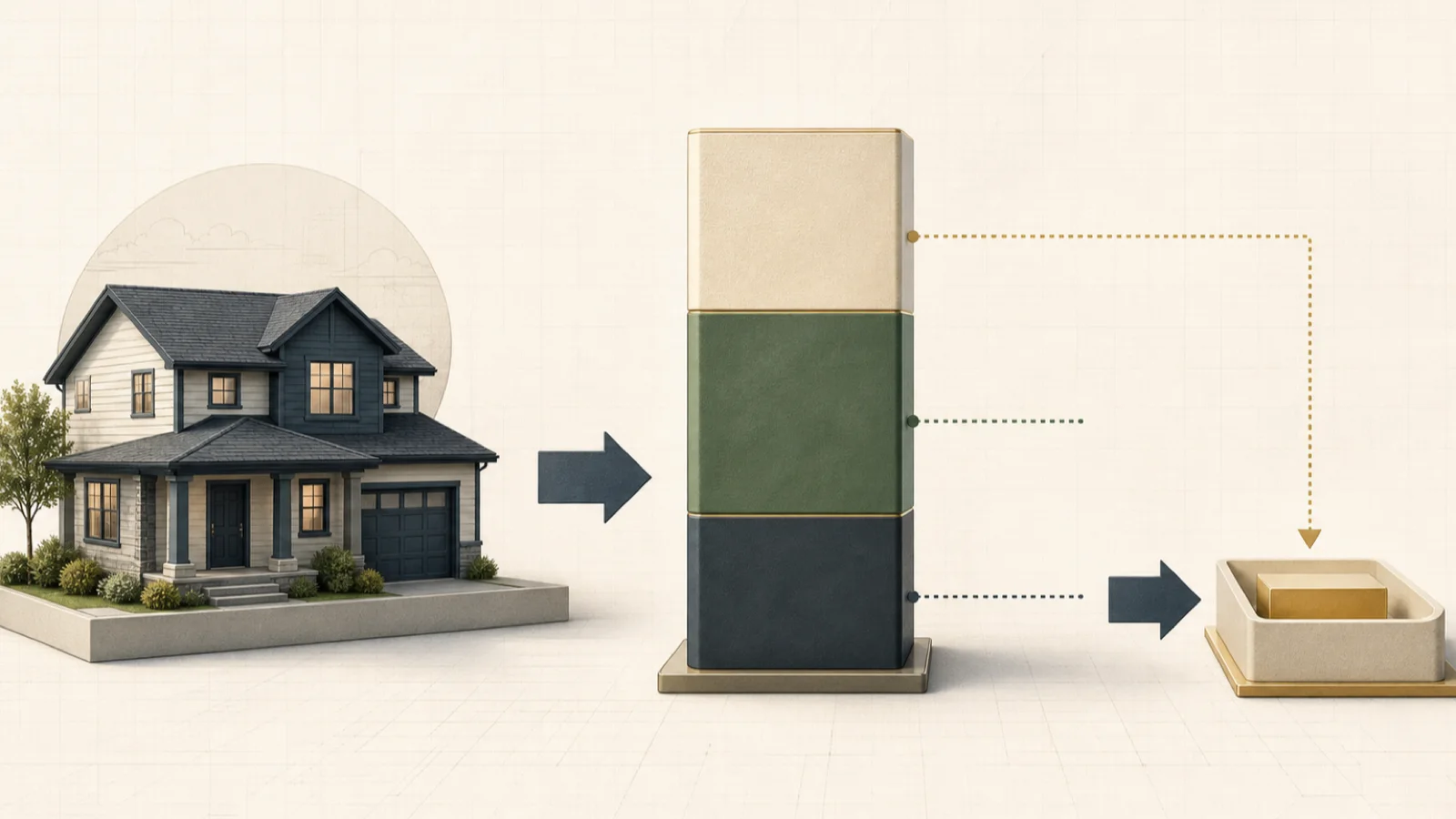
Four different equity numbers
Keep these amounts separate:
- Gross equity: value minus existing secured debt.
- Property-level borrowing capacity: the amount left under an assumed LTV or CLTV ceiling.
- Approved proceeds or credit limit: the lender's offer after underwriting and product rules.
- Prudent amount to use: the balance the property and household can repay through a downside case while retaining reserves.
The fourth number can be much smaller than the first three. A lender's approval measures the lender's willingness to extend credit under its rules; it does not determine whether the debt advances your plan.
Rental-property equity formulas
Gross equity
Gross Equity = Current Property Value - Existing Secured Debt
If a rental is worth $400,000 and its mortgage balance is $220,000:
$400,000 - $220,000 = $180,000 of gross equity
Loan-to-value
LTV usually compares one loan with property value:
LTV = Loan Balance / Property Value
The current first-mortgage LTV is:
$220,000 / $400,000 = 55%
Combined loan-to-value
CLTV includes the first mortgage and additional property-secured debt, such as a HELOC:
CLTV = Total Secured Debt / Property Value
If the investor adds and fully draws a $60,000 HELOC:
($220,000 + $60,000) / $400,000 = 70% CLTV
Illustrative borrowing capacity
Capacity = (Property Value x Maximum Allowed CLTV) - Existing Secured Debt
At an illustrative 75% maximum CLTV:
($400,000 x 75%) - $220,000 = $80,000
The line or loan might still be less than $80,000. It also may be unavailable if the lender does not accept rentals, the property type or state is ineligible, the lien or ownership cannot be accommodated, or the borrower does not meet repayment requirements.
A three-property portfolio example
Assume the same illustrative 75% ceiling for each property solely to compare the math:
| Property | Value | Secured debt | Gross equity | Capacity at 75% |
|---|---|---|---|---|
| Oak Street | $400,000 | $220,000 | $180,000 | $80,000 |
| Pine Avenue | $300,000 | $210,000 | $90,000 | $15,000 |
| Lake Road | $500,000 | $250,000 | $250,000 | $125,000 |
| Portfolio total | $1,200,000 | $680,000 | $520,000 | $220,000 |
The portfolio has $520,000 of gross equity but only $220,000 of property-level capacity under the assumed ceiling. That is before borrower qualification, lender line limits, closing costs, or a more conservative internal reserve.
Do not assume the $220,000 can be obtained through one loan. Standard residential products are often secured and underwritten property by property. Combining several rentals may require a portfolio, blanket, or commercial facility, which can introduce cross-collateralization, covenants, release rules, recourse, and maturity risk. The guide to accessing equity across a rental-property portfolio compares those structures.
What can reduce the amount?
The lender's appraised value
Your estimate, an automated valuation, a tax assessment, and a lender's appraisal may differ. Borrowing capacity moves with the value used by the lender.
If the $400,000 example appraises at $360,000, capacity under the same illustrative 75% ceiling becomes:
($360,000 x 75%) - $220,000 = $50,000
That $40,000 value difference reduces capacity by $30,000.
Every lien on the property
Include the first mortgage, an existing second mortgage or line, and other liens the lender requires in CLTV. Use current payoff information rather than the original loan amount or a balance from an old statement.
Product and property rules
A lender may restrict occupancy, state, unit count, condominium status, property condition, line size, lien position, or ownership. A personally titled one-unit rental and an LLC-owned five-unit building may need different products even if their equity percentages match.
Repayment capacity
Equity is collateral, not income. The lender may review personal debts and income, proposed payments, rental income documentation, property cash flow, reserves, credit history, and the number of financed properties. A high-equity rental can still fail repayment underwriting.
Costs and required payoffs
An appraisal, title work, recording, origination, points, prepaid interest, taxes, or other closing items can reduce net cash. A cash-out refinance must also pay off the old mortgage from the new proceeds. Distinguish gross loan amount, gross cash out, and net cash received.
HELOC capacity is not the same as the initial draw
An $80,000 HELOC limit does not mean you should draw $80,000 at closing. If a project needs $25,000 now and $20,000 later, staged draws can reduce the average outstanding balance. Confirm whether the lender requires a minimum initial draw or balance.
The unused portion should not be counted as a guaranteed emergency reserve. The CFPB's HELOC guidance notes that a lender may restrict additional borrowing if value declines significantly or the borrower's financial circumstances change. It also explains that payments can rise after the draw period or as a variable rate changes.
Read Can you get a HELOC on a rental property? for lender-screening questions. Compare a HELOC with a cash-out refinance if the full amount is needed at once.
Estimate a prudent borrowing amount
After calculating capacity, run a second limit based on cash flow and risk.
Set a stressed payment
For a variable-rate line, test the intended balance at a rate above the initial quote and test the repayment-period payment. For a term loan, use the full principal-and-interest payment and any required balloon or maturity date.
Protect property cash flow
Subtract the new payment after realistic vacancy, operating expenses, repairs, capital reserves, and existing debt service. The Rental Cash Flow Calculator provides a consistent pre-tax framework. A loan that turns a stable rental negative can make the rest of the household fund the property.
Preserve cash reserves
Keep cash for vacancy, insurance deductibles, repairs, and capital replacements outside the proposed borrowing. Borrowing “up to the limit” while treating the same line as the emergency reserve counts one source twice.
Protect the stronger asset
If equity from a stable rental will fund another acquisition or project, evaluate the combined downside. Failure at the new project can put the established rental at risk because the established property secures the debt.
Use a repayment deadline
Even when the contract permits a small draw-period payment, create a principal-paydown schedule tied to ordinary cash sources. A hoped-for sale, appreciation, or refinance should be a scenario, not the only path.
Does borrowing reduce net worth?
At funding, borrowing generally adds cash and equal debt before fees, so the transaction itself does not increase net worth.
Example immediately after a $50,000 draw:
- cash increases by $50,000;
- debt increases by $50,000; and
- net worth is unchanged before transaction costs.
Net worth changes later based on what happens to the money, interest and fees, property value, operating cash flow, and principal repayment. Spending the proceeds on an expense reduces cash while the debt remains. An improvement may add value, but the increase is not guaranteed to equal its cost.
Use the Rental Property Wealth Simulator to model debt, equity, cash flow, and net worth together. Review the site's calculation methodology so a loan draw is not accidentally entered as investment return.
Tax records matter from the first draw
Interest treatment is not determined only by the collateral. The 2025 IRS Schedule E instructions state that interest is generally allocated according to the use of loan proceeds and that keeping loan proceeds separate makes tracing easier.
Use a dedicated account, retain draw and payment records, connect each transfer to invoices or closing documents, and ask a qualified tax professional how federal and state rules apply. Mixed personal and rental uses can require allocation.
Final answer
Estimate borrowable rental equity with:
(Property Value x Lender Maximum CLTV) - Existing Secured Debt
Then reduce that estimate for the lender's appraisal, product limits, costs, property eligibility, and repayment underwriting. Finally, set your own lower limit based on stressed cash flow, cash reserves, collateral risk, and a credible payoff plan.
Total equity, mathematical capacity, approved credit, and prudent borrowing are four different numbers. Use the smallest one that applies.
Related guides
Yes, some lenders offer HELOCs on rental properties. Learn how investment-property HELOCs work, what lenders review, and how to estimate a possible line.
Compare a rental-property HELOC with a cash-out refinance using a worked equity example, decision rules, costs, and cash-flow risks.
Compare six ways to access rental-property equity, including a HELOC, home equity loan, cash-out refinance, portfolio loan, and sale.